
The Return Of The Mazda Rotary
The internal combustion engine has been around since before the dawn of the automobile. It still powers almost 90% of all cars and trucks in the US. Just about every auto manufacturer has long since committed to the piston engine design. Mazda persisted with their own layout for decades. This was of course the rotary engine.
The last rotary-powered Mazda rolled off the production line in 2012. But with the announcement of the rotary’s return in a modern Mazda, we thought it was time to revisit this fascinating technology once again. This blog will cover the origins of this design, its eventual discontinuation and recent rebirth.
Origins Of The Wankel Rotary
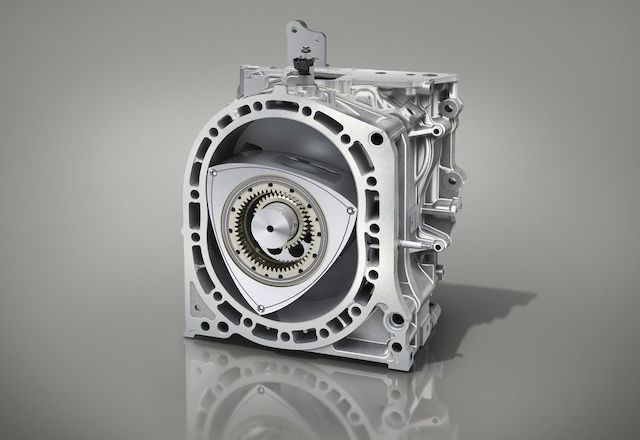
Image Credit: CarAndDriver
Invented in the 1950s by Felix Wankel, a German engineer, the Wankel Rotary engine used spinning triangular rotors to produce its power instead of pistons that moved up and down. It was compact and powerful but suffered from poor fuel efficiency and high oil consumption.
Many auto manufacturers saw potential in it and decided to refine the technology. But despite big names like Mercedes, Alfa Romeo and Toyota all showing interest, only a handful of manufacturers ended up offering rotary-powered passenger cars to the public.
Notable Rotary-Powered Cars
Several manufacturers experimented with rotary engines in the ‘50s and ‘60s. Some early rotary pioneers included the:
- 1964 NSU Spider
- 1967 NSU Ro80
- 1967 Mazda Cosmo Sport 110S
- 1969 Citroen M35
- 1973 Citroen Birotor
Initially, only two actually put their designs into production. These were NSU with their Spider and Ro80 and Citroen with the M35 and GS Birotor. These vehicles were developed as a result of a joint venture between NSU and Citroen called Comotor SA.
The NSU Spider arrived first in 1964, but various design issues prevented it from becoming a commercial success. NSU and Citroen struggled to overcome the high wear and poor fuel economy of the early Wankel designs. By the mid ‘70s both manufacturers had abandoned the technology.
Mazda And The Wankel Rotary
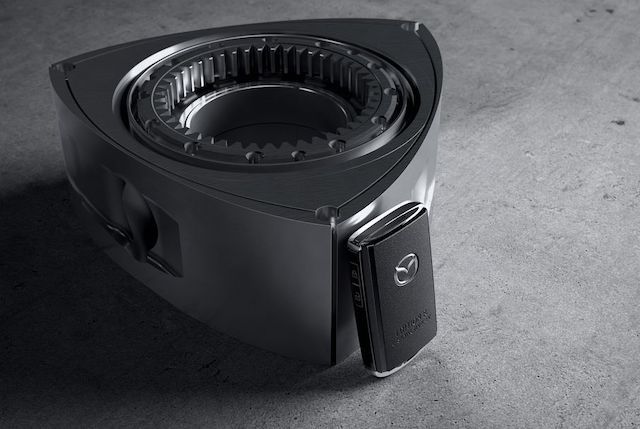
Image Credit: CarAndDriver
Mazda, meanwhile, had been developing its own version of the Wankel rotary. The 1967 Cosmo Sport 110S was its first-ever rotary-powered car. It sold in small numbers (not available in the US), but the smooth and powerful 110hp motor gave the small sports car great performance.
While other manufacturers couldn’t quite crack the Wankel engine’s shortcomings, Mazda continued to incrementally improve and develop the rotary. It added stronger seals, fuel injection, and even turbochargers. The rotary motor was installed into everything from luxury sedans to trucks.
But it was the 1978 Mazda RX-7 which introduced rotary power to a global audience. The RX-7 remained in production until 2002, with the final third-generation models developing up to 261hp from their twin-rotor twin-turbo engines.
Its replacement, the RX-8, was Mazda’s final rotary-powered model. It offered excellent handling and performance but did without the turbos of its predecessor. It still had the smooth, high-revving power delivery that defines a rotary motor. But it also suffered from poor gas mileage and relatively high oil consumption. Tightening emissions regulations finally saw it being discontinued in 2012.
Close to two million Mazdas were fitted with rotary engines over 45 years. An impressive statistic. And rotary engines have seen remarkable success in motorsport, too. The highlight is the incomparable 1991 Mazda 787B Le Mans winning car.
Mazda continued making conventional piston engine designs after 2012. But this was the final chapter for the Wankel rotary in production cars.
Until now.
Rebirth Of An Iconic Design
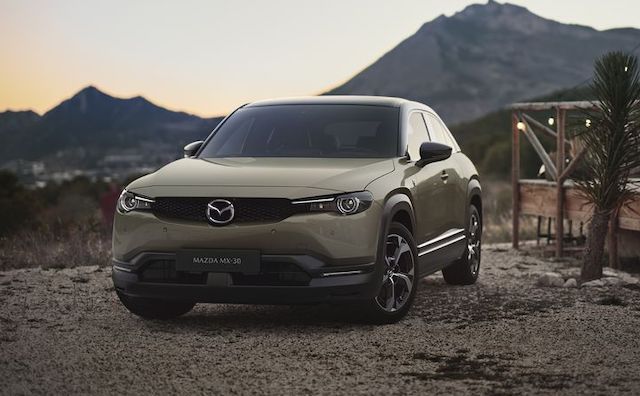
Image Credit: CarAndDriver
Mazda announced the return of the rotary motor in January 2023. But not quite in the way you might expect.
This time, the rotary design is used as a range extender for Mazda’s MX-30 EV. It has a single-rotor design that uses direct injection and exhaust gas recirculation to increase fuel efficiency and reduce emissions. In the 2023 Mazda MX-30 e-Skyactiv R-EV, the little 75hp motor acts as a generator for the battery pack.
Compared to the regular MX-30 EV, this results in an additional 24 hp and a far more usable range. Range that isn’t reliant solely on EV charging infrastructure. While it hasn’t been officially confirmed for the US, Mazda may still add the MX-30 e-Skyactiv R-EV plug-in hybrid to its lineup here.
So, not quite the blockbuster return Mazda rotary fans might have hoped for, but certainly a step in the right direction. And, judging by recent patent filings and concept cars, Mazda clearly hasn’t given up on the idea of a rotary-powered car in the future.
Always Choose OEM Parts For Your Mazda
Rotary-powered Mazda’s may be in our future, but until then, make sure you only use OEM parts for the engine in your current Mazda. RealMazdaParts.com only sells genuine parts backed by Mazda's manufacturer warranty. Use our Mazda model selector or Mazda VIN Decoder to find the right part the first time.