
What Is An Alternator And Why Is It Important?
The car battery often gets all the credit for powering the vehicle's electrical system. Have you ever thought about where the battery gets all its power, though? That's where the alternator comes in. It keeps the battery charged as long as the engine is on.
What Is An Alternator?

An alternator is a small cylinder-shaped electrical generator. It's located in the front of the car, usually under the engine. It's connected to the serpentine belt and the car battery.
An alternator has several important components, including:
- A cylindrical metal housing
- Copper windings
- Voltage regulator
- Serpentine belt pulley
- Cooling fan
All these components work together to harness electromagnetic induction. The goal is to convert mechanical energy into electrical energy. The alternator takes the mechanical energy from the engine, converts it into electrical energy, and then charges the battery with it.
How The Engine Powers The Alternator
As the engine runs, the serpentine belt attached to the engine's crankshaft spins a pulley attached to the alternator. This powers the alternator, which enables it to create electromagnetic energy. It then sends the electromagnetic energy to the battery. As long as the engine is running, the alternator converts its mechanical energy into electrical current for the battery.
The voltage regulator inside the alternator makes sure the electricity is safe and at the correct voltage. It also protects the battery from getting overcharged.
The Alternator Keeps The Battery Charged
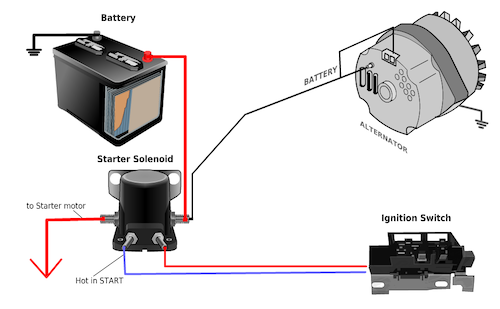
The battery is vital for powering electrical components throughout your vehicle. If it gets low, you can start to run into problems with electrical components, such as:
- Headlights
- Engine control unit
- Interior lights
- Instrument cluster
- Car entertainment unit
- Door locks
- Window motors
- More
The alternator makes sure the battery stays charged to prevent these problems. Without the alternator charging it, the battery only has enough power run the car for about 10 minutes. Beyond that, it needs the alternator. Once you start up the engine, the alternator kicks in and powers the battery.
What Happens When Your Alternator Fails
An OEM Mazda alternator lasts a long time: typically around 100,000 miles. Some even last to around 150,000 miles. That means your OEM alternator will last years before you have to replace it.
When an alternator fails, one of these two things happens:
- The alternator fails to charge the battery
- The alternator overcharges the battery (only when the voltage regulator fails)
If you're dealing with a failed alternator, you want it undercharge the battery. If your alternator overcharges the battery, you also have to replace the battery. It's because batteries can only be charged at a certain voltage. If the voltage is too high, the battery will be damaged.
Either way, your car's electrical components will either start to fail or stop working completely. Your car needs all of its electrical components, especially the engine control unit, to function properly.
When your car's alternator fails, you'll need to get it replaced immediately. The best course of action is to order an OEM replacement alternator. At Real Mazda Parts, we offer wholesale prices for genuine OEM replacement parts. We have an extensive catalog of alternators for a variety of Mazda models. Please contact us if you need help finding the correct OEM alternator for your car.